


The Tour in My Voice
Information Before Booking


The itinerary for the day
Approx. 6–8 hours total, including drive, snowshoe hike, ice fishing, and campfire lunch.
1) Pick-up in Tromsø — 08:00 (or agreed time)
Meet at the pick-up point. We make sure all equipment fits perfectly, then start the day.
2) Scenic drive to the lake area — ~40 minutes
A scenic drive out of Tromsø toward the winter landscape and our fishing area.
3) Snowshoe hike to the frozen lake — 30–60 minutes
We strap on snowshoes and hike through the snow-covered landscape to reach a tranquil frozen lake. The hike time depends on pace and conditions, but is typically 30 to 60 minutes.
4) Ice fishing session + campfire — ~2–3 hours on the ice
At the lake we drill through the thick ice and fish using traditional techniques. If the fish doesn’t bite, we move holes, change bait, or try to “jig” the bait. While we wait, we gather around a crackling fire to warm up, enjoy lunch, snacks and drinks, and share stories.
5) Snowshoe hike back — 30–60 minutes
After a couple of hours on the ice, we pack up and head back through the snowy wilderness toward the car.
6) Return drive to Tromsø — ~40 minutes
We drive back and return you to Tromsø later in the afternoon — with new skills, fresh memories, and maybe even a fish for dinner.

Campfire Lunch on the Ice
In the cold winter weather, with amazing views, there is nothing better than a good, warm lunch next to the campfire. So once our fishing lines are in the water and the wait for the fish to bite has started, we settle in.
I’ll start preparing the Snofa for us to sit by the fire and enjoy klippfisk (our lunch). The meal is a homemade fish stew with potatoes, onion, Norwegian codfish, and a few hidden spices — perfect together with proper bread toasted over the fire.
A winter hike and campfire is never complete without kokekaffe (coffee made over the fire) and some snacks to satisfy our sweet tooth. For those who don’t drink coffee, I also have tea — and everyone gets their own bottle of warm solbærsafte (sweet berry drink) to sip throughout the day.
If you’ve already had the same meal on another tour with me, I’ll make sure to bring a different lunch. And I know you might ask: why don’t we eat the fish we catch? Usually the fish bite a bit later in the day, and experience has shown there isn’t enough time to prepare it properly out by the lake.
However, if you’re unsure how to clean and cook the fish, you can book me to come to your apartment and prepare a 3-course meal built around what we caught. The food will be honest, traditional Norwegian cooking with clean, simple flavours.
Campfire Lunch on the Ice
In the cold winter weather, with amazing views, there is nothing better than a good, warm lunch next to the campfire. So once our fishing lines are in the water and the wait for the fish to bite has started, we settle in.
I’ll start preparing the Snofa for us to sit by the fire and enjoy klippfisk (our lunch). The meal is a homemade fish stew with potatoes, onion, Norwegian codfish, and a few hidden spices — perfect together with proper bread toasted over the fire.
A winter hike and campfire is never complete without kokekaffe (coffee made over the fire) and some snacks to satisfy our sweet tooth. For those who don’t drink coffee, I also have tea — and everyone gets their own bottle of warm solbærsafte (sweet berry drink) to sip throughout the day.
If you’ve already had the same meal on another tour with me, I’ll make sure to bring a different lunch. And I know you might ask: why don’t we eat the fish we catch? Usually the fish bite a bit later in the day, and experience has shown there isn’t enough time to prepare it properly out by the lake.
However, if you’re unsure how to clean and cook the fish, you can book me to come to your apartment and prepare a 3-course meal built around what we caught. The food will be honest, traditional Norwegian cooking with clean, simple flavours.
The Fish We May Catch
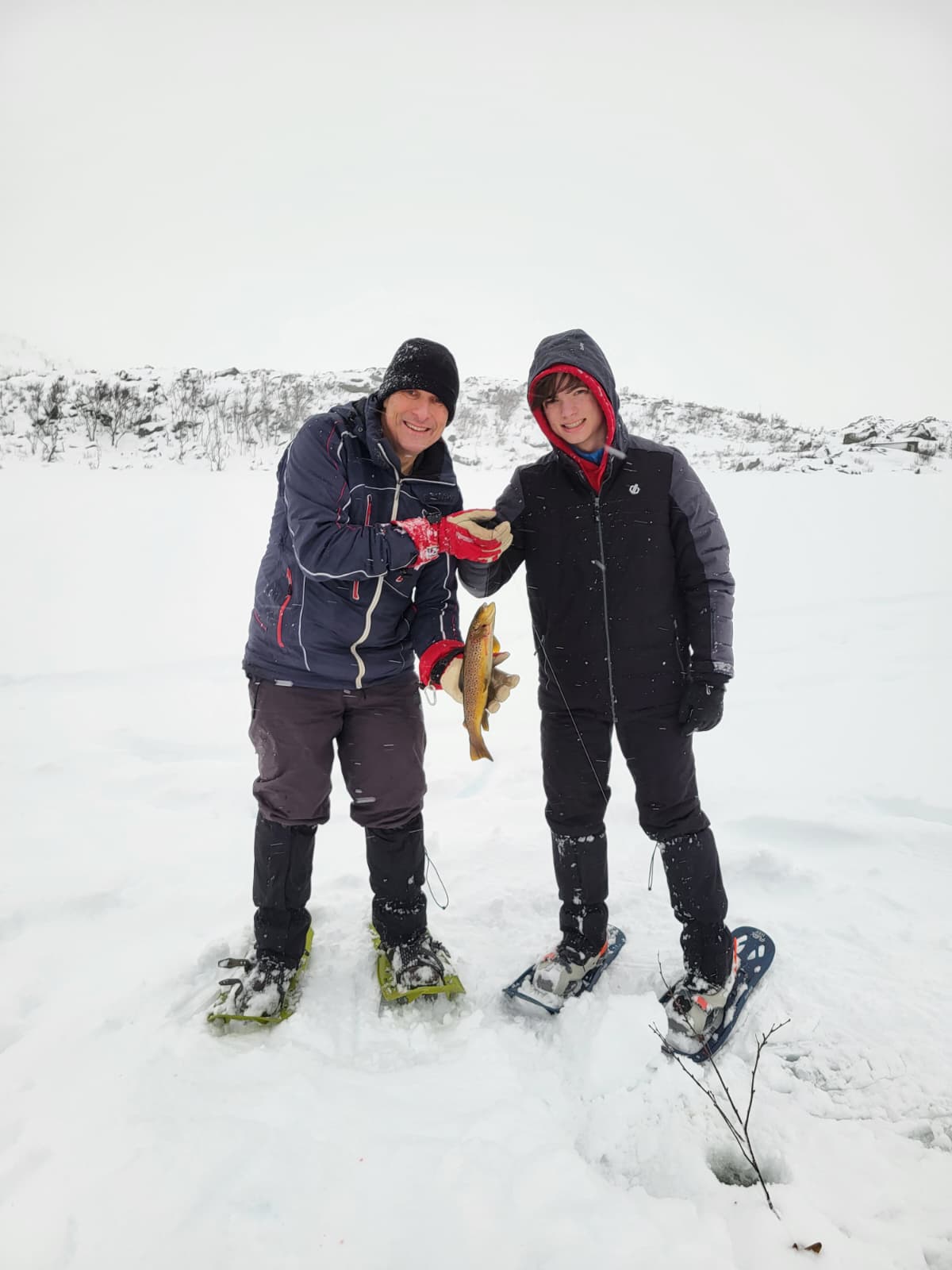
Out on the frozen lake, we fish the traditional way and see what the day gives us. The most common fish here are Arctic char and Trout. Two fish with their own wierd mods and mannerism's. If they bite is up to nature and your luck, so nothing is guaranteed.
If you catch a fish, you can take it with you and prepare it for dinner later. Personaly I think both trout and arctic char, flavoure wise, is better than salamon. And if you don’t want to bring it, your guide will gladly have it.
Either way, the focus is the experience: learning the technique, feeling the quiet winter landscape, and enjoying the time around the campfire together.
Wildlife & Animal Sightings
On the snowshoe hike and out on the frozen lake, we’re guests in the winter wilderness. Some days are quiet, other days you’ll notice tracks in the snow, movement in the treeline, or birds passing overhead.
We may see signs of local wildlife such as reindeer, ptarmigan, fox, or birds of prey — but nothing is guaranteed. Animals move on their own terms, and we keep it respectful: no chasing, no disturbing.
The videos below give a small taste of the kind of winter nature we may experience during the day.
Good To Know
This is a real winter wilderness day: a scenic drive, a snowshoe hike to a frozen lake, and a few hours out on the ice. The pace is calm and adjusted to your group.
If you catch a fish, you can take it with you and prepare it for dinner later. And if you don’t want to bring it, your guide will gladly have it.
Dress warm: layered winter clothing, hat, gloves, scarf, and good winter footwear. Arctic weather can change quickly, and you’ll spend time outdoors.
